

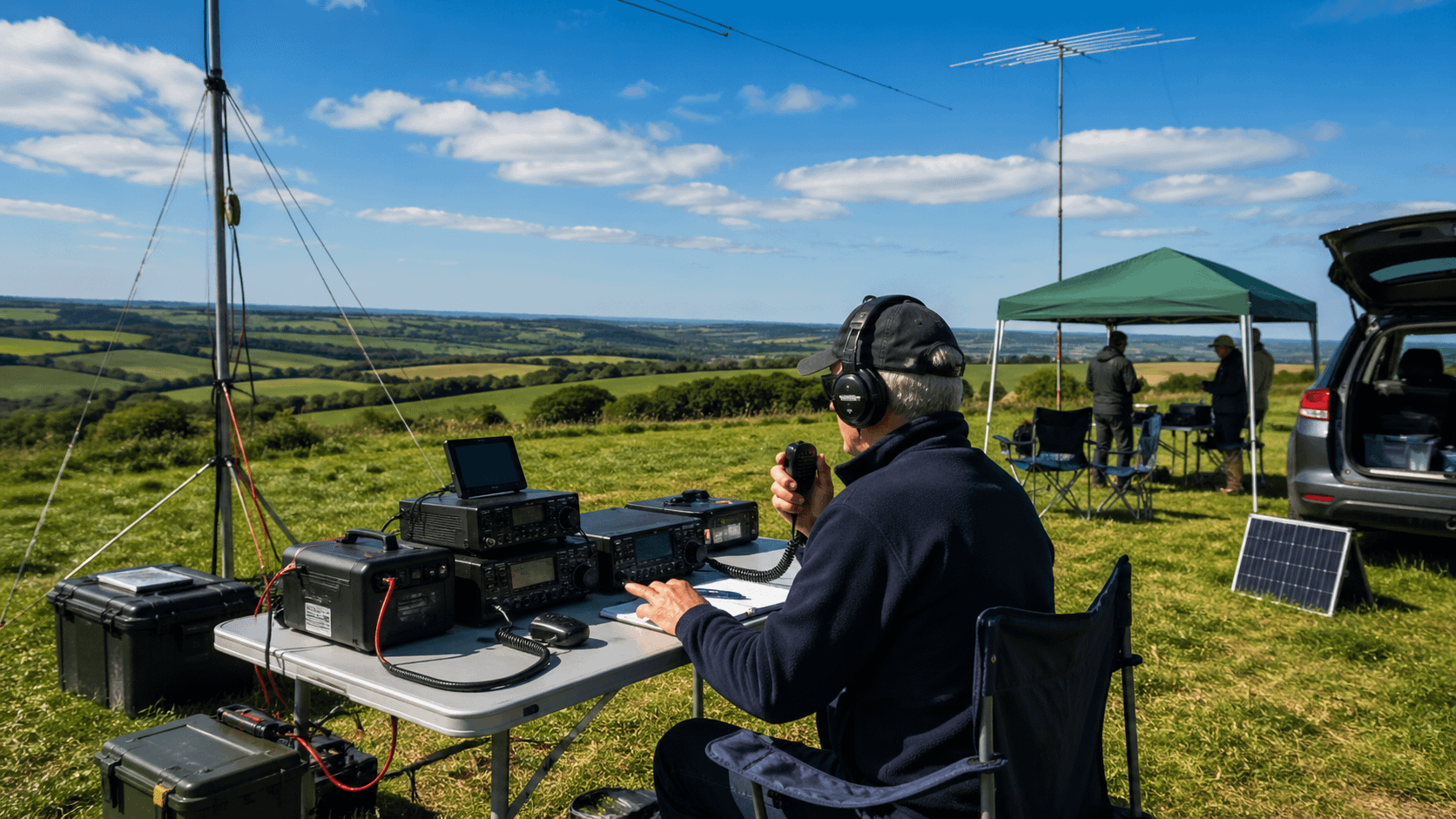
For many amateur radio operators, one of the most enjoyable parts of the hobby is taking radio equipment outdoors. A field day is an opportunity to leave the shack, set up a temporary station, experiment with antennas, operate from a different location and enjoy radio as a social, practical and technical activity.
Field days can be simple or ambitious. They may involve one person with a handheld radio and a small antenna, or a full club station with HF radios, masts, generators, batteries, logging laptops and multiple operators. The common idea is the same: get on the air from outside the normal home station and see what can be achieved.
For Kildare Amateur Radio Club, field days are a great way to bring members together, introduce newcomers to the hobby and show the public what amateur radio is all about.
What Is a Field Day?
A field day is an outdoor amateur radio activity where operators set up temporary radio stations away from their usual home location. The aim may be to make contacts, test equipment, practise portable operation, take part in a contest, demonstrate the hobby or simply enjoy a day of radio with other operators.
A field day can take place in many locations, including:
- A club grounds or community hall
- A park or open green space
- A hilltop or high point
- A farmyard or field, with permission
- A coastal location
- A campsite
- A heritage site or special event location
The key feature is that the station is temporary. Operators bring what they need, set it up, operate for a period of time, and then pack everything away again.
Why Take Radio Outdoors?
Operating outdoors changes the radio experience. At home, many operators are limited by space, buildings, noise, planning restrictions or antenna size. Outdoors, there may be more room to put up a wire antenna, raise a portable mast or choose a location with better radio coverage.
Outdoor operating can help operators:
- Try new antennas
- Improve VHF and UHF range from higher ground
- Reduce electrical noise from nearby houses
- Practise setting up temporary stations
- Test battery and portable power systems
- Learn how equipment performs in real conditions
- Work as a team with other club members
- Promote amateur radio to the public
It is also simply enjoyable. Radio, fresh air, conversation and practical problem-solving make a great combination.
A Great Activity for Beginners
Field days are ideal for newcomers. They allow beginners to see different types of equipment in use and learn by watching experienced operators. Instead of trying to understand everything from a book or video, a newcomer can see how a station is built from the ground up.
At a field day, a beginner might learn:
- How to connect a radio, power supply and antenna
- How to erect a portable mast safely
- How to check SWR
- How to call CQ
- How to log contacts
- How different bands behave
- How operators choose frequencies
- How to listen before transmitting
- How a club station works
Many people find that the hobby makes more sense when they see it working in real life. A field day turns theory into practice.
Planning a Field Day
A successful field day starts with good planning. The event does not have to be complicated, but a little preparation makes the day safer and more enjoyable.
Important planning questions include:
- Where will the event take place?
- Is permission needed from the landowner or venue?
- What bands and modes will be used?
- What radios, antennas and masts are needed?
- How will equipment be powered?
- Who is responsible for setup and safety?
- Is there shelter if the weather changes?
- Are there toilets, parking and refreshments nearby?
- Will members of the public be invited?
- Is the event mainly social, training, contesting or demonstration?
For a club event, it is useful to assign roles in advance. One person may coordinate the site, another may look after equipment, another may manage logging, while others help with antennas, safety and public engagement.
Choosing a Location
Location matters. For VHF and UHF, height is very useful. A hilltop or elevated site can greatly increase coverage. For HF, space for antennas may be more important than height. A quiet location away from electrical noise can also improve reception.
A good field day location should be:
- Safe and accessible
- Suitable for antennas
- Away from obvious hazards
- Not too close to overhead power lines
- Respectful of local residents and land users
- Easy to leave clean and tidy afterwards
In County Kildare, there are many possible locations for portable radio activities, from open rural areas to community venues and local high points. Permission and safety should always come first.
Equipment for a Basic Field Day Station
A simple outdoor station does not need to be expensive. The basic equipment depends on the type of operation, but a typical setup may include:
- Radio transceiver
- Microphone or key
- Antenna
- Coax cable
- Portable mast or support
- Battery or portable power supply
- SWR meter or antenna analyser
- Headphones
- Logbook or laptop
- Chair and table
- Weather protection
- Basic tools and spare connectors
For VHF and UHF, a handheld radio with a better antenna may be enough for a simple portable activity. For HF, a portable transceiver and wire antenna can provide excellent results.
Antennas: The Heart of the Station
The antenna is often the most important part of a field day station. Outdoors, operators can experiment with antennas that may not be practical at home.
Common field day antennas include:
- Dipoles
- End-fed wires
- Vertical antennas
- Portable beams
- Linked dipoles
- Magnetic loops
- Roll-up J-poles
- Yagi antennas for VHF/UHF
A simple wire antenna, raised carefully and connected properly, can perform very well. Field days are a great opportunity to compare antenna designs and learn what works best in different conditions.
Safety is essential. Masts and wires should be clearly visible, securely supported and kept well away from power lines, roads and public walkways.
Powering the Station
Portable power is a major part of field day operation. Some events use generators, but batteries are increasingly popular because they are quiet, clean and easy to manage.
Power options include:
- 12V leisure batteries
- Lithium battery packs
- Portable power stations
- Solar panels
- Vehicle power, where appropriate
- Generators for larger setups
Power planning should include radio current draw, expected operating time, laptop charging, lighting and any other equipment. It is also wise to bring spare cables, fuses and connectors.
Low-power operation can be very effective, especially with a good antenna. Field days are a good reminder that efficiency often matters more than brute force.
Modes to Try Outdoors
Field days can include many operating modes. Voice operation is popular because it is easy for visitors to understand. However, digital modes and Morse code can also be very effective.
Possible modes include:
- FM on VHF/UHF
- SSB on HF
- CW/Morse code
- FT8 and other digital modes
- DMR or other digital voice modes
- Satellite contacts
- APRS
- Simplex local contacts
The mode chosen depends on the licence, equipment, location and purpose of the event. A club field day can include several modes so members can experience different parts of the hobby.
Logging Contacts
Logging is part of good operating practice. A log records who was contacted, when the contact took place, the band, mode, signal report and any useful notes.
Logs can be kept on paper or using software. For a club event, a shared logging system may be helpful, especially if multiple operators are using the same call sign.
Logging teaches discipline and gives the club a record of what was achieved. It can also be used for awards, contests or reports after the event.
Field Days and Emergency Preparedness
Field days are fun, but they also build useful skills. Setting up a temporary station outdoors is similar to what might be needed during a communications disruption or community support situation.
Operators practise:
- Working without mains power
- Setting up antennas quickly
- Communicating from temporary locations
- Passing clear messages
- Troubleshooting under pressure
- Managing equipment in poor weather
- Working as a team
This does not mean every field day is an emergency exercise, but the skills are closely related. A club that regularly operates outdoors is better prepared to communicate when conditions are less than ideal.
Public Demonstrations
Field days are also excellent public engagement opportunities. Many people have never seen amateur radio in action. When they see a temporary station making contacts across Ireland, Europe or further afield, the hobby becomes much easier to understand.
A good public demonstration should be clear and welcoming. Avoid too much technical language at first. Explain the basics:
- This is a licensed radio station
- We are communicating using radio waves
- The antenna is sending and receiving signals
- We can operate locally or internationally
- Amateur radio is for learning, experimentation and community
Visitors may be fascinated by the idea that real communication can happen without a mobile phone network or internet connection.
Safety Considerations
Safety must be part of every field day. Outdoor radio involves cables, masts, batteries, tools, weather and sometimes members of the public.
Key safety points include:
- Keep antennas away from overhead power lines
- Secure masts and guy ropes properly
- Mark trip hazards clearly
- Protect equipment from rain
- Use batteries safely
- Avoid overloading cables
- Keep walkways clear
- Have a first aid kit available
- Monitor weather conditions
- Take down antennas if lightning is possible
No radio contact is worth risking injury. A safe event is a successful event.
Making the Day Enjoyable
A field day should not feel like hard work for everyone involved. Build in time for conversation, tea, coffee, food and socialising. Encourage members to try operating, but do not pressure anyone. Some people enjoy setting up antennas, others enjoy logging, others enjoy talking to visitors.
For a club, the social value can be just as important as the technical results. Field days help members get to know one another and share knowledge in a relaxed setting.
Tips for First-Time Field Day Operators
If you are attending your first field day, keep it simple.
Bring suitable clothing, a notebook, headphones if you have them, and a willingness to learn. Ask questions. Watch how equipment is connected. Listen to contacts being made. Try logging. If you are licensed and comfortable, make a contact under guidance.
Do not worry if you do not understand everything. Amateur radio is learned gradually, and field days are one of the best ways to build confidence.
Suggested Field Day Activities for a Club
A club field day could include several small activities, such as:
- Demonstrating a basic HF station
- Setting up a VHF/UHF portable station
- Comparing two antenna types
- Running a beginner operating session
- Showing how to check SWR
- Demonstrating digital modes
- Making a few scheduled contacts with other clubs
- Running a short club net from the field
- Inviting visitors to listen
- Taking photos and writing a short report afterwards
This gives structure to the day while still keeping it relaxed.
Leave No Trace
Outdoor radio should always respect the location. When the event is over, the site should be left as clean or cleaner than it was found. Remove all wires, cable ties, tape, litter and temporary signs. Respect wildlife, local residents and other users of the space.
Good behaviour protects the reputation of amateur radio and makes it easier to return to good locations in the future.
Final Thoughts
Field days are one of the best ways to experience amateur radio. They combine technical learning, outdoor activity, teamwork and real communication. They help beginners understand the hobby, give experienced operators a chance to experiment, and allow clubs to demonstrate the value of radio to the wider community.
Taking radio outdoors reminds us that amateur radio is not confined to a desk or a shack. With a radio, an antenna and a little preparation, communication can happen from a field, a hilltop, a park, a community centre or almost anywhere.
For Kildare Amateur Radio Club, field days offer a perfect opportunity to learn, experiment, socialise and promote the hobby locally. Whether you are a complete beginner or an experienced operator, there is always something to enjoy when radio goes outdoors.